
A tied-back embankment on a new concrete base put 15 m of heritage tramline back on solid ground after a watermain leak triggered a slip.
- Client
- Watercare Services
- Services
- Retaining, slip remediation and watermain support design
- Location
- Waitākere Ranges, Auckland
- Scale
- 15 m of track reinstated · 600 mm watermain
- Status
- Complete 2012
01 / Project overview
The brief
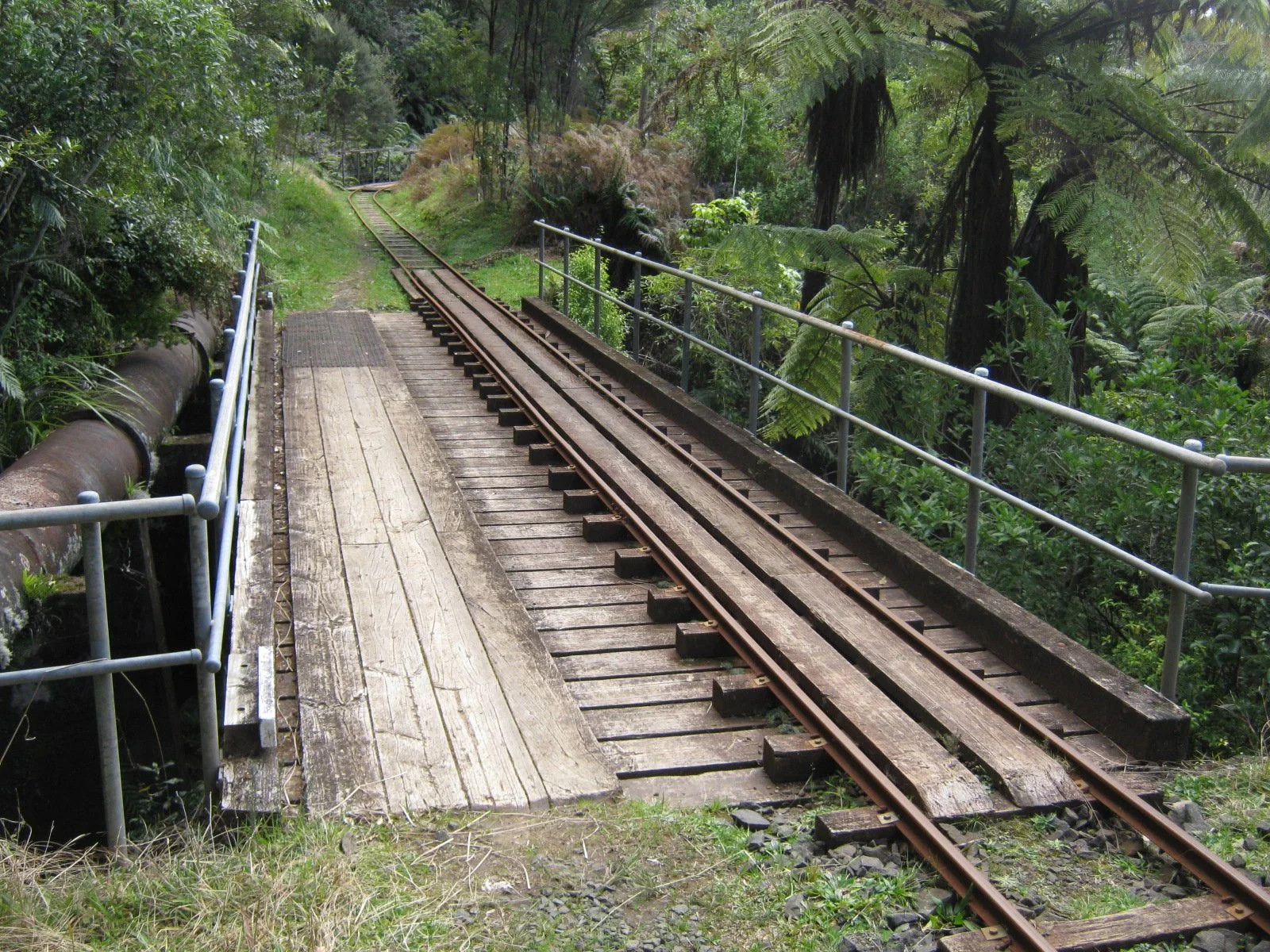
The Waitākere Tramline was finished in 1907 to haul materials from Swanson Railway Station to the Waitākere Dam, completed in 1910. It then became the only access along the route of Watercare’s 600 mm watermain, and later carried the Rainforest Express, a miniature tourist train.
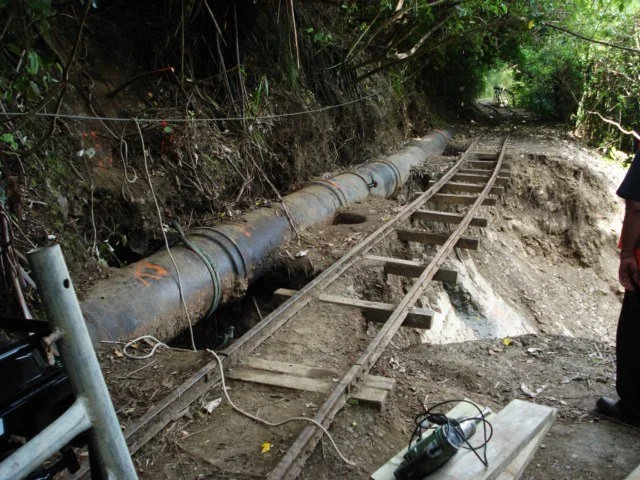
In November 2011 a leak in the 600 mm main triggered a substantial slip. It carried away a 15 m section of the tramline formation and left 6 m of track hanging in mid-air. Watercare needed a timely, cost-effective repair to both the watermain and the tramline, and asked ACH to develop the engineering solution.
02 / Our approach
How we delivered it
Choosing the right system
Securing the watermain first
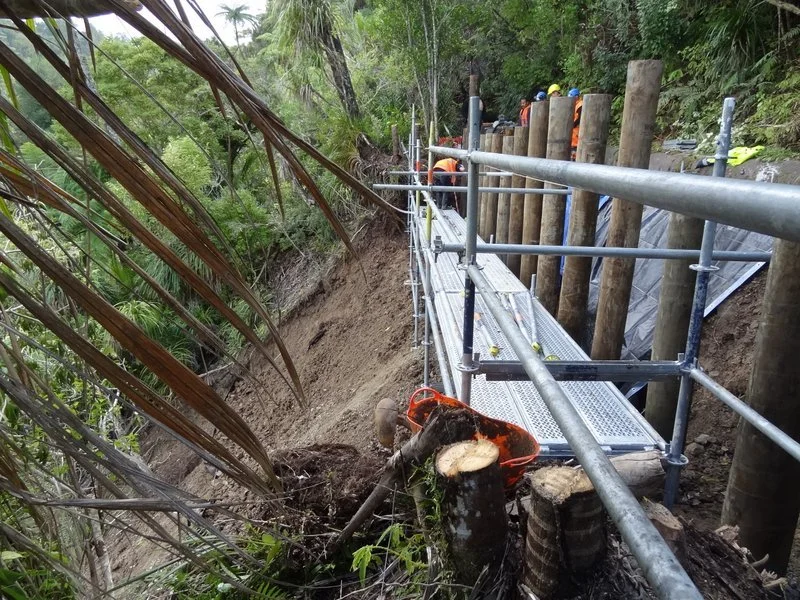
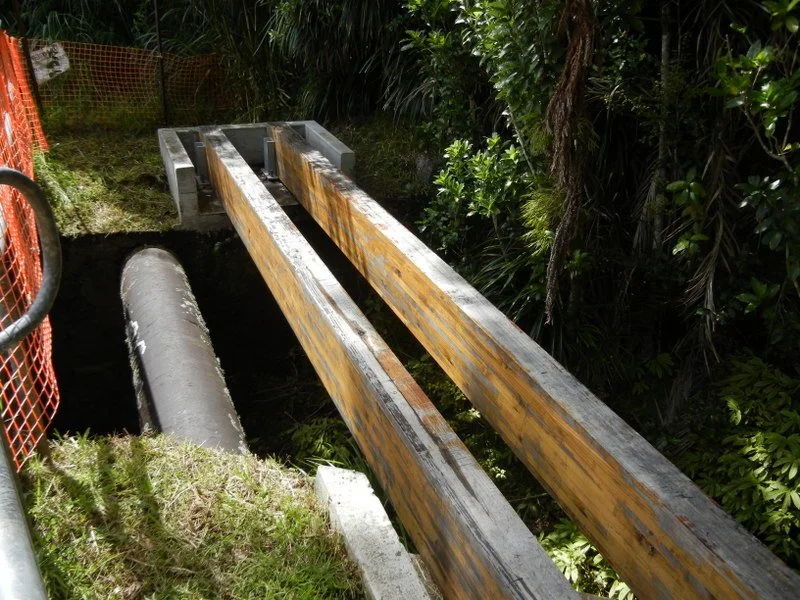
The damaged section of main was replaced and secured with rock anchors, keeping the water supply safe while the tramline repair was designed and built.
A new foundation on rock
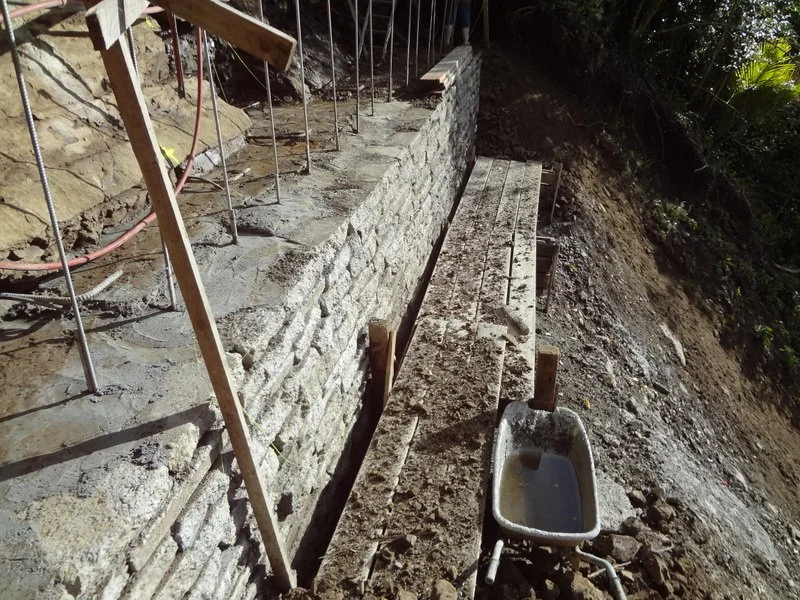
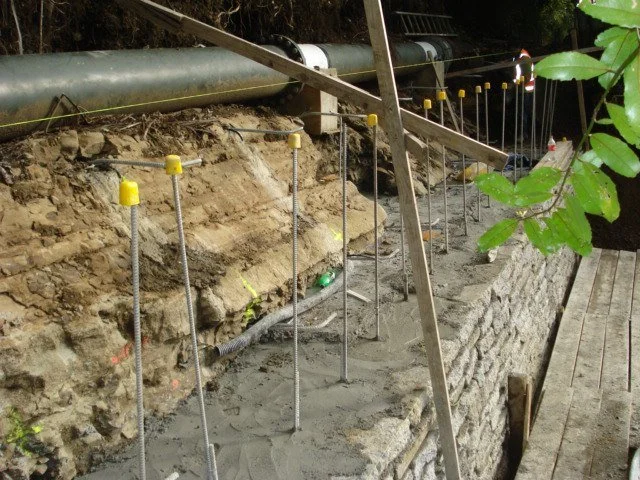
With the track and its temporary supporting scaffolding removed, 30 m³ of soil and 27 m³ of rock were excavated to cut a level ledge into the slope. A reinforced concrete slab poured on the ledge became the base for the new retaining structure.
Rebuilding the formation
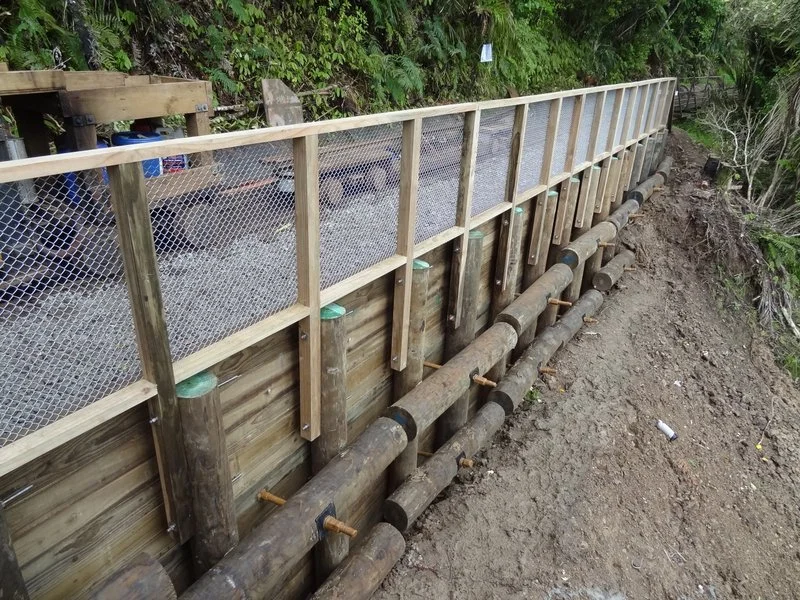
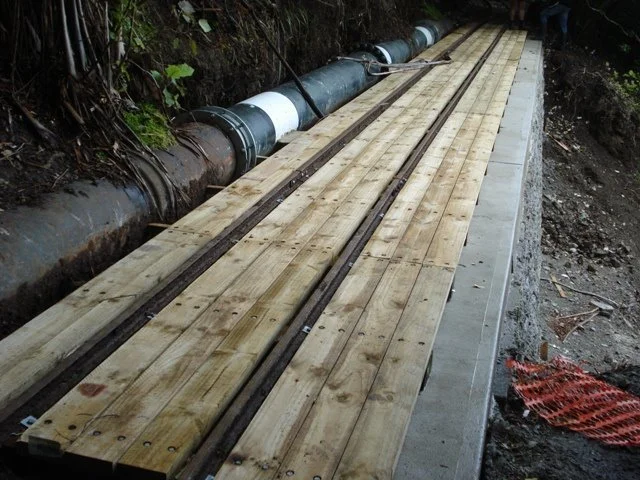
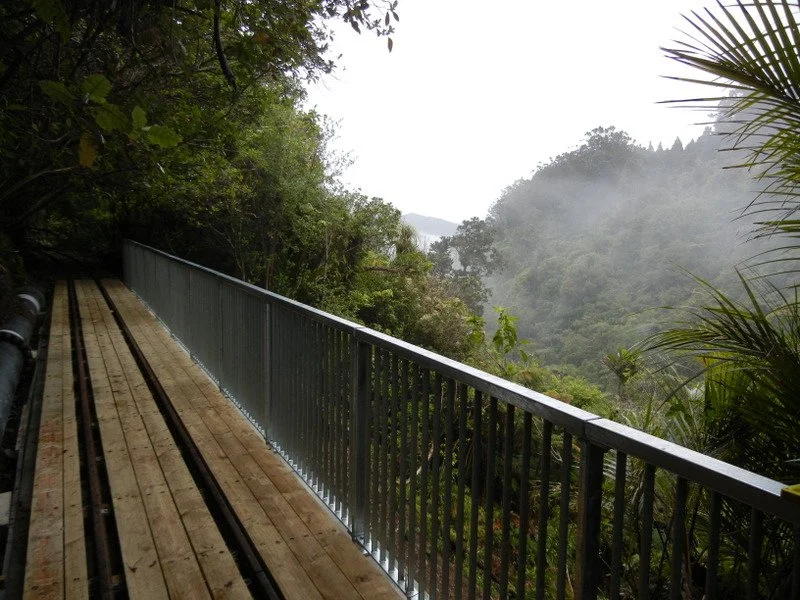
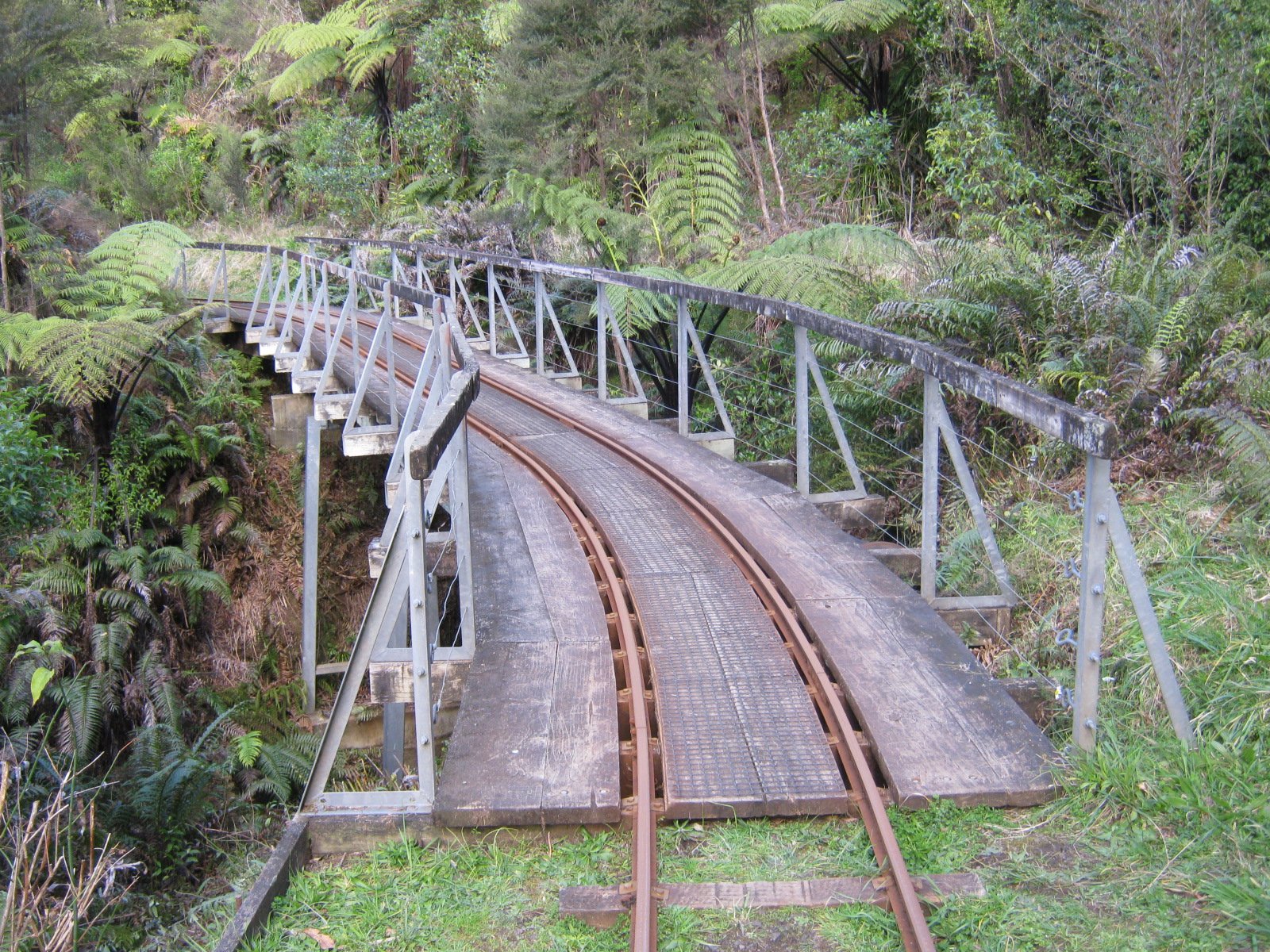
On that base we designed a tied-back reinforced embankment built with recycled concrete, then the tracks were reinstated on top. We delivered it with Watercare, Canadian Pacific and Auckland Stonemasons.
03 / The outcome
“Finished before the consent deadline with Code of Compliance issued, the plant achieves 85–90% ammonia reduction and 99% BOD and fecal coliform reduction, producing effluent suitable for future irrigation reuse – and it can be expanded if the community grows.”
05 / Gallery
■ Similar project?