
Compact tertiary wastewater treatment and land disposal for a rebuilt surf club on coastal DOC land, with high groundwater and the beach close by.
- Client
- Surf Life Saving Kariaotahi
- Services
- Three waters design, consenting, construction observation
- Location
- Kariaotahi Beach, Auckland
- Scale
- 5,300 L/day peak flow · 300 m² disposal field
- Status
- Complete 2025
01 / Project overview
The brief
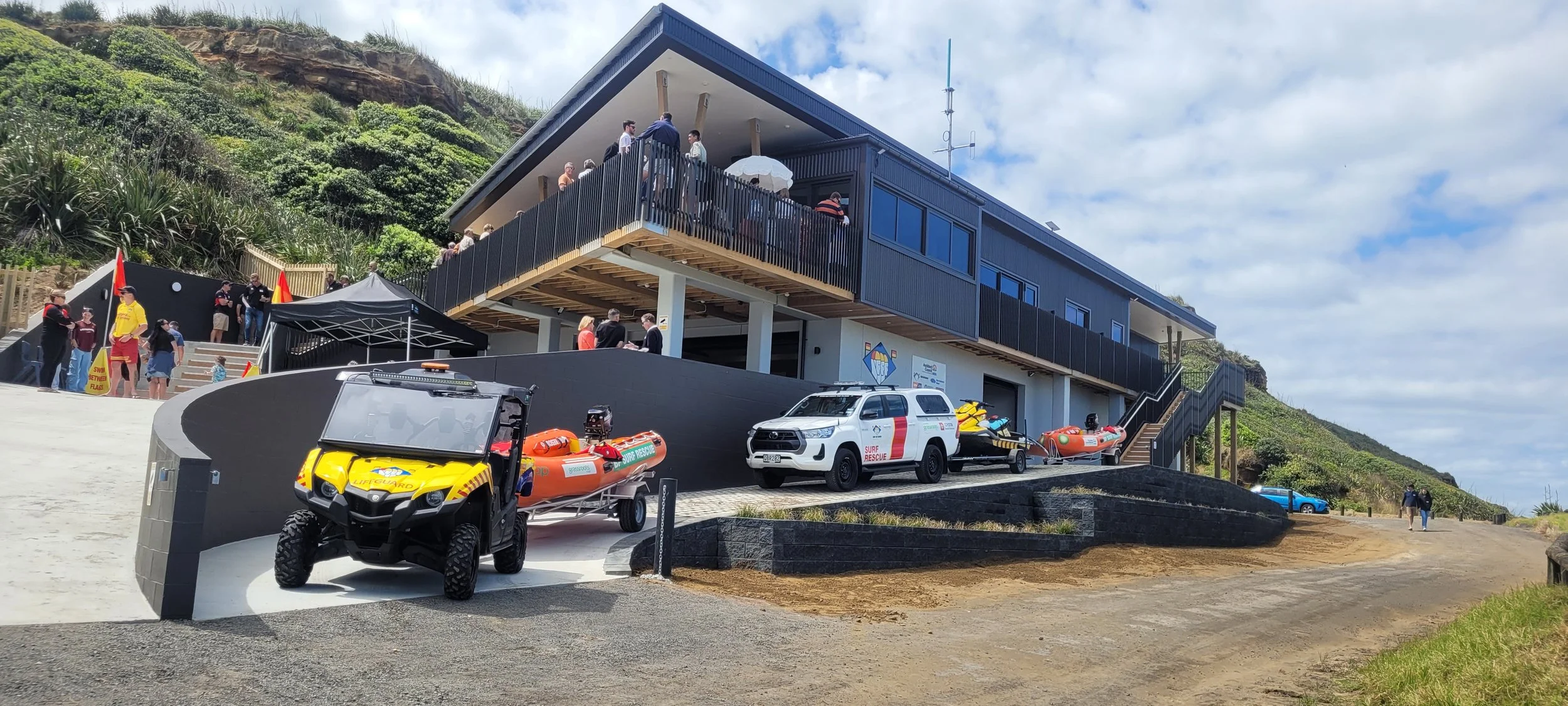
Surf Life Saving Kariaotahi’s club rooms, and the septic tank and trenches serving them, had reached the end of their life. The new complex includes a 36-seat training room, bunkrooms for 26 overnight guests, capacity for 50 day-programme attendees, a commercial kitchen, toilets and communal showers – a mixed, nitrogen-heavy wastewater stream with flows ranging from summer event peaks to almost nothing in winter.
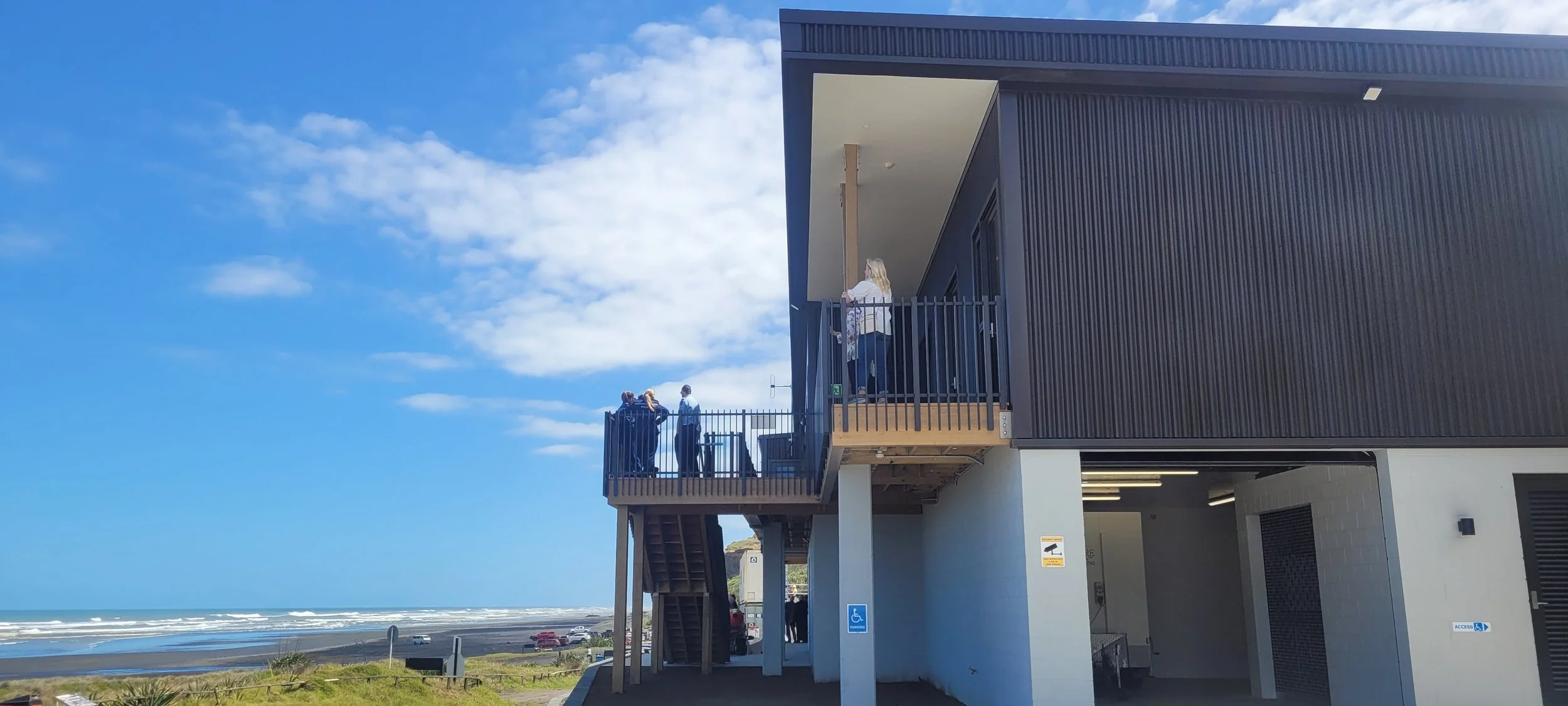
As main three waters civil designer, led by Project Manager Linda Norman, we needed to fit tertiary treatment and disposal onto Department of Conservation lease land beside the beach, with a disposal area limited to 300 m², high seasonal groundwater and the nearshore environment close by.
02 / Our approach
How we delivered it
Treatment for seasonal flows
We designed for a peak flow of 5,300 L/day using a submerged aerated fixed-film process with UV disinfection. A 10 m³ primary tank helps with nitrogen reduction, with space for a future dosing tank rather than building it up front. A 15 m³ buffer tank after UV evens out flows to the disposal field without the effluent turning septic, and remote telemetry lets the system be monitored through quiet periods.
Disposal and planting
Pressure-compensating drip irrigation lines are buried 150–200 mm below ground to protect them in the harsh coastal setting. The disposal field planting creates valuable habitat, including a nationally at-risk native beach species and native coprosma with high nutrient uptake (up to 700 kg/ha/year).
Three waters across the site
We also designed the wastewater pipe layout around the building’s deep strip footings, decommissioning of the old system, stormwater treatment and disposal (including permeable paving on the boat ramp), private water supply, and earthworks and sediment control. We secured the resource consents, including a section 127 variation when the building design changed significantly in 2023, and observed construction through to close-out.
03 / The outcome
“The club opened for the 2025–26 summer season on 1 November 2025. The system achieves BOD₅ and TSS below 15 mg/L, total nitrogen below 40 mg/L and thermotolerant coliforms below 20 cfu/100 mL, and is designed to serve the club for the building’s 50-year design life.”
■ Similar project?
Talk to the engineers who delivered this.