
Structural and civil engineering for a major marina redevelopment, balancing ambitious architecture with demanding structural, durability and environmental requirements.
- Client
- Half Moon Bay Marina
- Services
- Three waters, structural design
- Location
- Half Moon Bay
- Scale
- 13 ha · 500 berths · 30 m spans
- Status
- Complete 2022
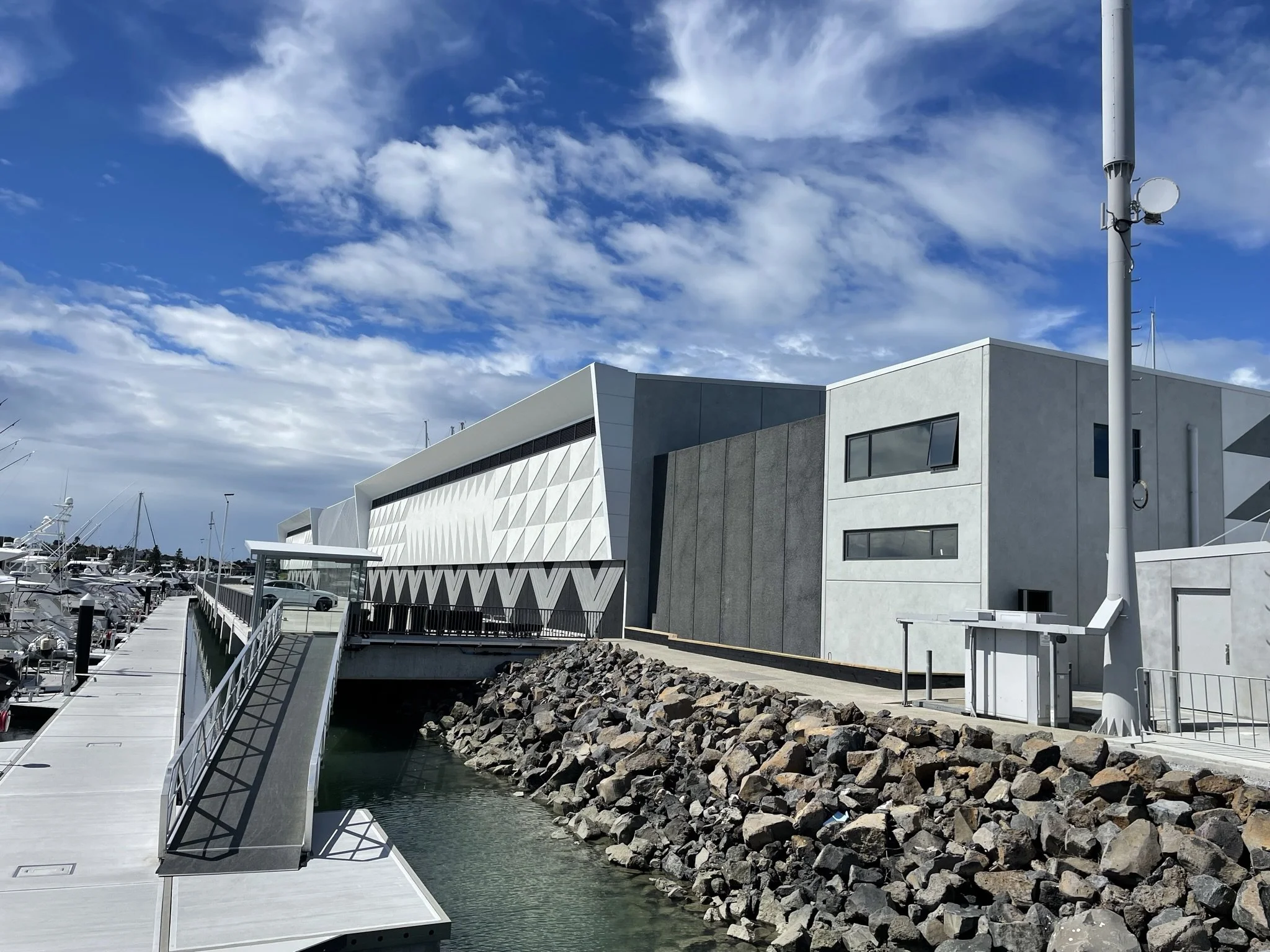
01 / Project overview
The brief
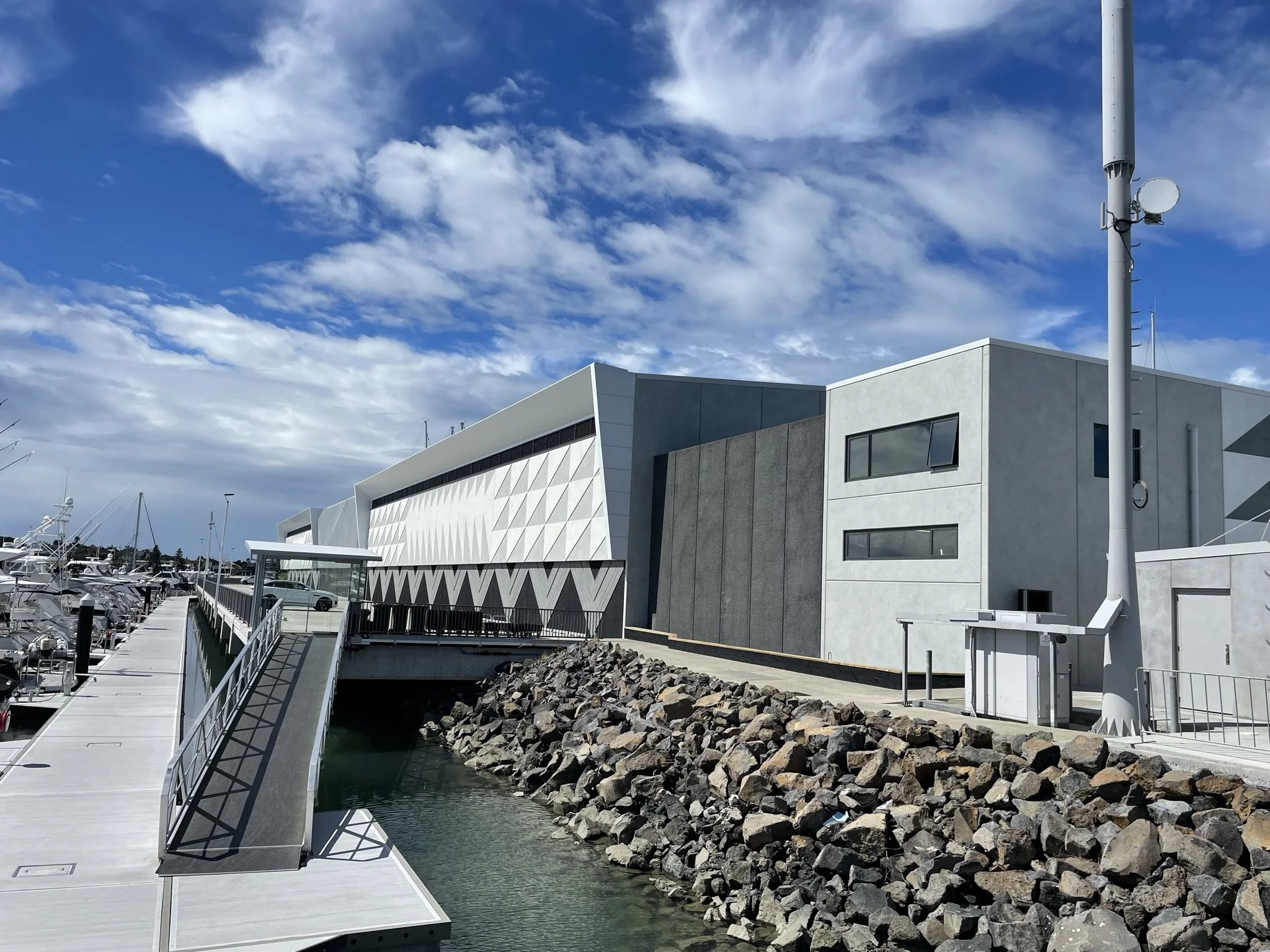
The redevelopment of Half Moon Bay Marina’s North Pier created an opportunity to combine strong architectural design with highly functional marine structures.
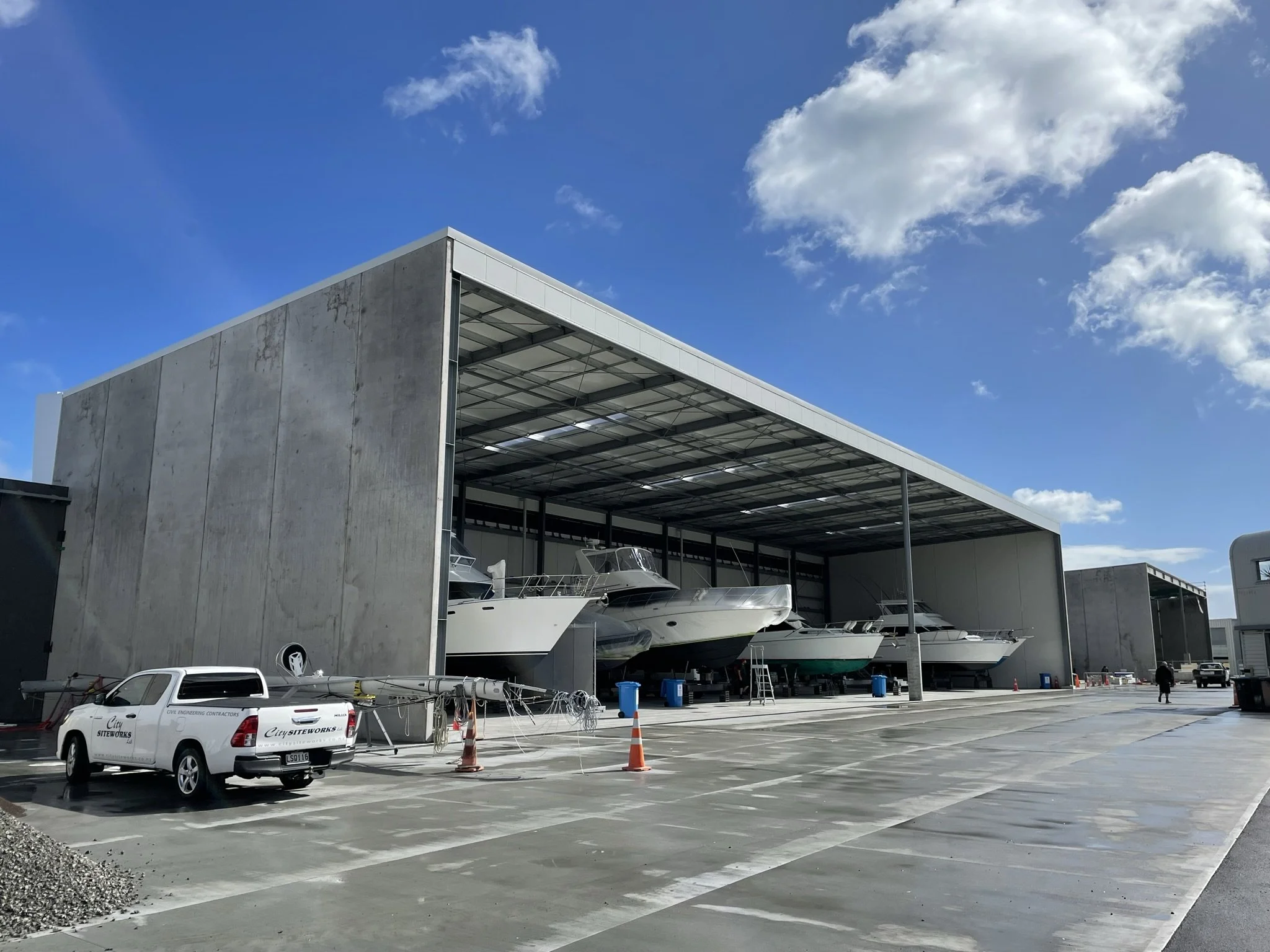
The new maintenance and repair facilities needed to maximise undercover space within tight planning and site constraints, while accommodating significant structural loads and the demanding durability requirements of a waterfront environment.
At the same time, the redevelopment presented a significant environmental challenge. Stormwater from the existing 2 ha maintenance hardstand discharged directly to the Tāmaki River Estuary, with testing showing elevated concentrations of zinc and copper above the ANZECC 2000 Guidelines for Aquatic Ecosystems discharge criteria.
ACH was engaged to provide both structural and civil engineering design, creating an integrated solution for the buildings, site and stormwater management.
02 / Our approach
Engineering a structure for the marine environment
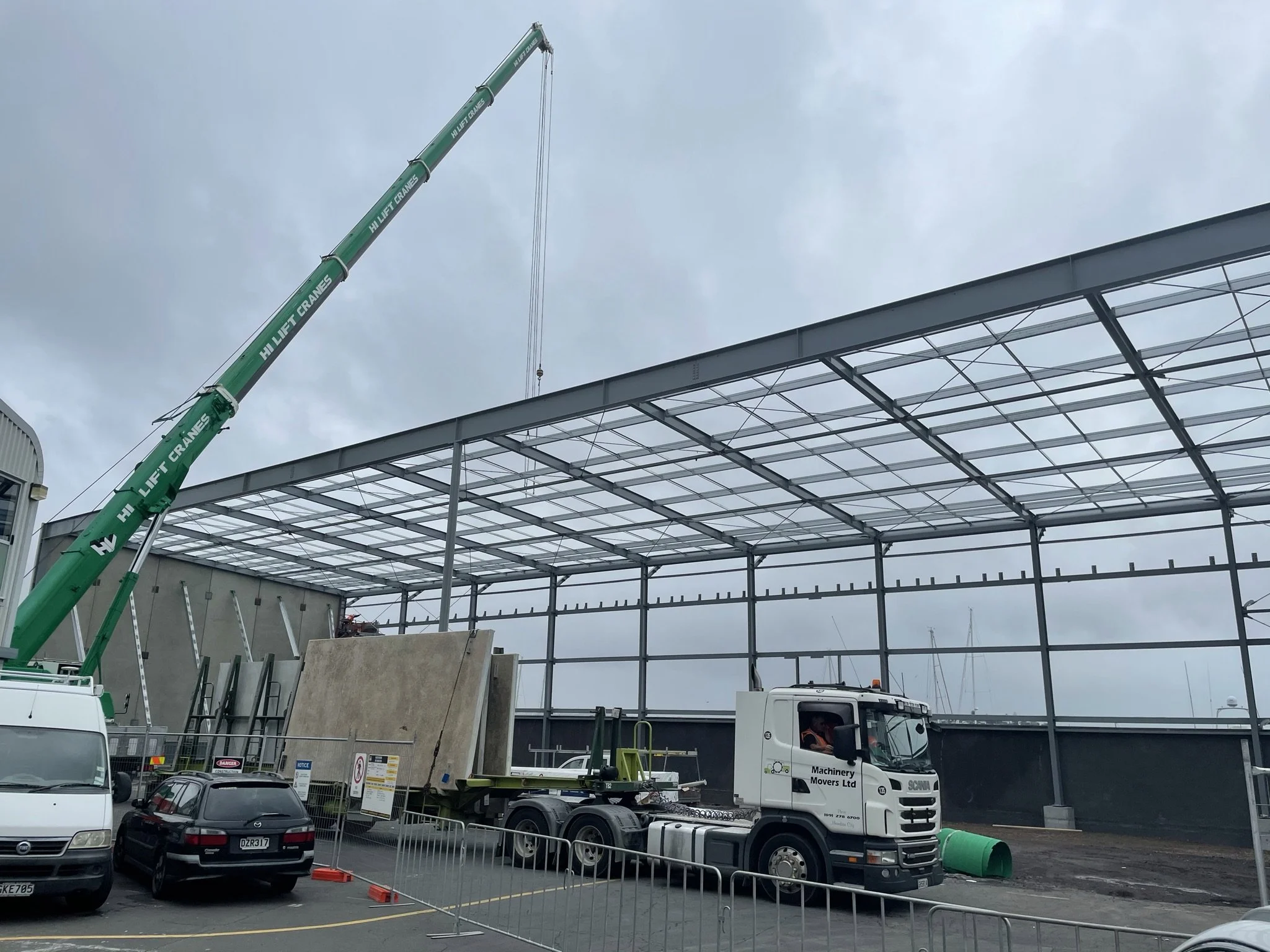
The new boat sheds and workshop incorporate large spans of up to 30 metres, allowing generous openings and maximising usable space for marine operations.
Custom-welded steel beams, up to 800 mm deep, were developed to achieve the required spans while maintaining the open character of the buildings.
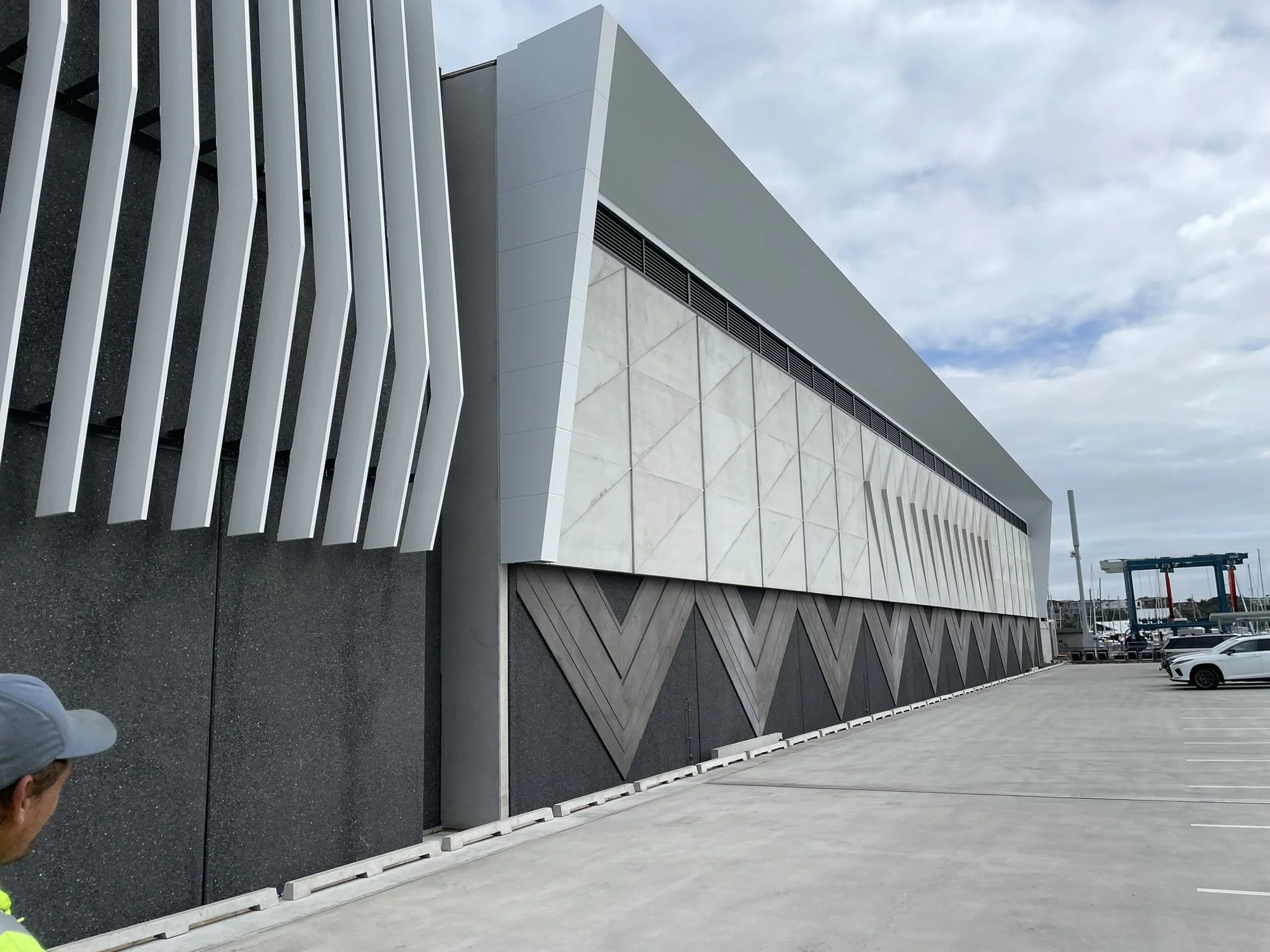
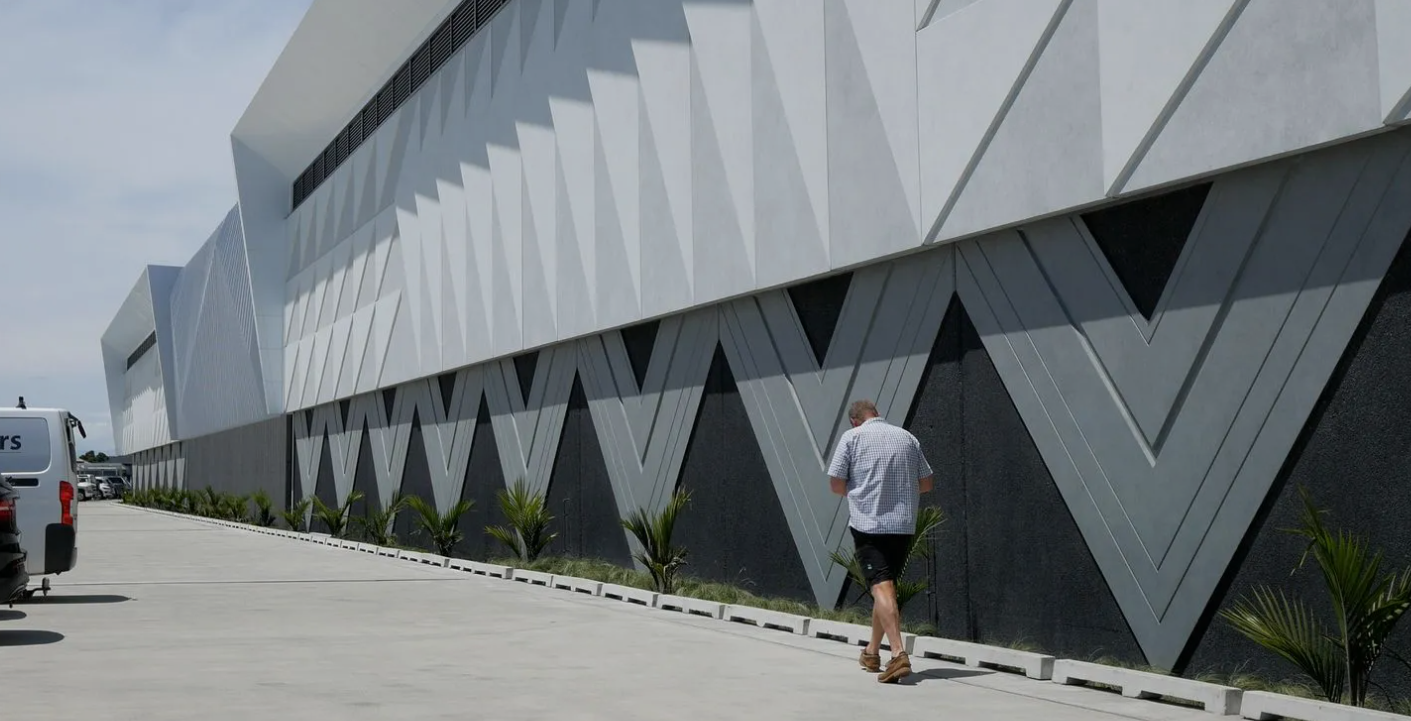
The structures combine precast concrete, steel, Litecrete panels and aluminium louvres, creating an efficient structural solution while supporting the architectural intent.
The site presented additional complexity, including reclaimed ground, large point loads and an 85-tonne marine travelift. Structural detailing and material selection were carefully considered to accommodate these demands and provide the durability required in the waterfront environment.
Protecting the receiving environment
Marina maintenance activities can introduce contaminants such as copper, zinc and petroleum hydrocarbons into stormwater runoff.
At Half Moon Bay, the redevelopment provided an opportunity to fundamentally improve how these different water streams were managed.
The first step was to separate stormwater from trade waste and washdown water.
ACH designed a dedicated trade waste system for water generated by the boat wash bay and maintenance areas. Interceptor drains prevent clean stormwater from entering these areas, while Fox valves allow first-flush runoff from the open-air maintenance and washdown areas to be directed into the dedicated treatment system.
Stormwater from the maintenance hardstand is treated through a proprietary treatment system, while runoff from the new parking and manoeuvring areas is treated using a combination of Water Sensitive Design (WSD) elements.
03 / The outcome
“The redevelopment delivered larger, more functional maintenance facilities while significantly improving the management of stormwater and trade waste.
Analytical testing of treated stormwater from the redeveloped areas demonstrated compliance with the ANZECC 2000 Guidelines for Aquatic Ecosystems discharge criteria.
Testing of the trade waste system also showed zinc and copper concentrations well below Watercare’s trade waste limits.
The result is a development that combines robust marine structures with a more considered approach to protecting the receiving environment.”
04 / Final comments
A considered approach to marine development
Marinas are an important part of New Zealand's coastal economy, but their proximity to sensitive marine environments creates particular engineering challenges.
At Half Moon Bay Marina, integrating structural, civil and environmental considerations from the outset enabled ACH to deliver infrastructure that supports marina operations while reducing its impact on the surrounding coastal environment.
05 / Gallery
■ Similar project?